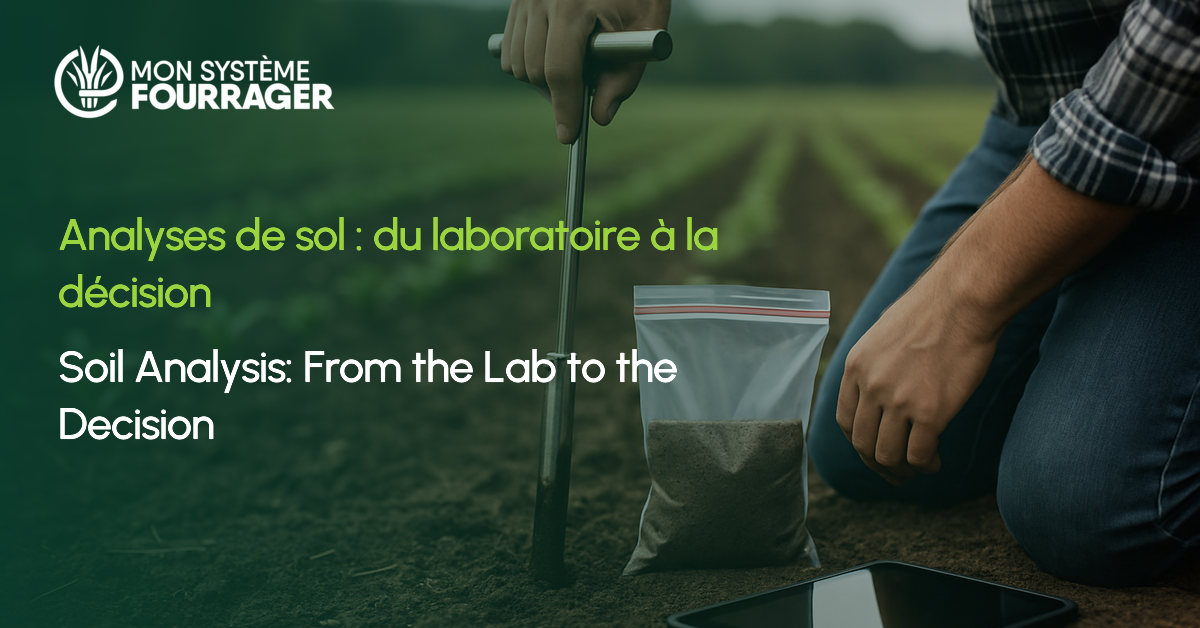
In short: visit soil analysis form the basis of agronomic decisions — fertilization, PAEF. But a lab report sitting in an email is useless. The value comes from linking each analysis to its plot and history.
In this article:
Why soil tests are the foundation
Everything starts from the soil. The richness of a plot determines the permitted inputs and the fertilization strategy. It is also the foundation of compliance: the phosphorus balance relies on soil analyses taken every five years. Without up-to-date soil data, it is impossible to make good decisions or justify them properly.
The problem: scattered reports
In practice, analysis reports arrive by email, in PDF format, and sometimes on paper. They pile up without being linked to plots, and when it comes time to plan fertilization or produce a regulatory document, everything has to be tracked down. The result: wasted time and decisions made without the complete picture.
From the lab to the field
The step that changes everything is linking each analysis to its searchable plot in a single place by the producer and the agronomist. With My Forage System, soil analyses live in the same place as yields, interventions, and the history of each plot. Lab data becomes decision-making data, not a forgotten file.
Make better decisions with history
Linked over time, the analyses tell a story: the evolution of soil fertility, the effect of a crop rotation, the response to fertilization. It is this continuity that allows the agronomist to adjust their recommendations and the producer to understand why. The single entry avoid having to copy this data elsewhere. The samples must be entrusted to a accredited laboratory ; for sampling and interpretation methods, the CRAAQ refers.
Frequently Asked Questions
How often should soil be tested?
For compliance purposes, soil fertility is determined by analyses conducted every five years; for agronomic monitoring, a more frequent schedule may be relevant.
What to do with the old reports?
Link them to their plots in a single system, to build a usable history rather than a pile of PDFs.
Who interprets the analyses?
The agronomist. The tool centralizes and contextualizes the history; the interpretation remains professional.
In summary
A soil analysis is only as good as its connection to its plot and history. By centralizing analyses in My Forage System, the producer and the agronomist turn scattered reports into decisions — and simpler compliance. See also how the agronomists save time daily.
In short: visit soil analysis form the basis of agronomic decisions — fertilization, PAEF. But a lab report sitting in an email is useless. The value comes from linking each analysis to its plot and history.
In this article:
Why soil tests are the foundation
Everything starts from the soil. The richness of a plot determines the permitted inputs and the fertilization strategy. It is also the foundation of compliance: the phosphorus balance relies on soil analyses taken every five years. Without up-to-date soil data, it is impossible to make good decisions or justify them properly.
The problem: scattered reports
In practice, analysis reports arrive by email, in PDF format, and sometimes on paper. They pile up without being linked to plots, and when it comes time to plan fertilization or produce a regulatory document, everything has to be tracked down. The result: wasted time and decisions made without the complete picture.
From the lab to the field
The step that changes everything is linking each analysis to its searchable plot in a single place by the producer and the agronomist. With My Forage System, soil analyses live in the same place as yields, interventions, and the history of each plot. Lab data becomes decision-making data, not a forgotten file.
Make better decisions with history
Linked over time, the analyses tell a story: the evolution of soil fertility, the effect of a crop rotation, the response to fertilization. It is this continuity that allows the agronomist to adjust their recommendations and the producer to understand why. The single entry avoid having to copy this data elsewhere. The samples must be entrusted to a accredited laboratory ; for sampling and interpretation methods, the CRAAQ refers.
Frequently Asked Questions
How often should soil be tested?
For compliance purposes, soil fertility is determined by analyses conducted every five years; for agronomic monitoring, a more frequent schedule may be relevant.
What to do with the old reports?
Link them to their plots in a single system, to build a usable history rather than a pile of PDFs.
Who interprets the analyses?
The agronomist. The tool centralizes and contextualizes the history; the interpretation remains professional.
In summary
A soil analysis is only as good as its connection to its plot and history. By centralizing analyses in My Forage System, the producer and the agronomist turn scattered reports into decisions — and simpler compliance. See also how the agronomists save time daily.
In short: visit soil analysis form the basis of agronomic decisions — fertilization, PAEF. But a lab report sitting in an email is useless. The value comes from linking each analysis to its plot and history.
In this article:
Why soil tests are the foundation
Everything starts from the soil. The richness of a plot determines the permitted inputs and the fertilization strategy. It is also the foundation of compliance: the phosphorus balance relies on soil analyses taken every five years. Without up-to-date soil data, it is impossible to make good decisions or justify them properly.
The problem: scattered reports
In practice, analysis reports arrive by email, in PDF format, and sometimes on paper. They pile up without being linked to plots, and when it comes time to plan fertilization or produce a regulatory document, everything has to be tracked down. The result: wasted time and decisions made without the complete picture.
From the lab to the field
The step that changes everything is linking each analysis to its searchable plot in a single place by the producer and the agronomist. With My Forage System, soil analyses live in the same place as yields, interventions, and the history of each plot. Lab data becomes decision-making data, not a forgotten file.
Make better decisions with history
Linked over time, the analyses tell a story: the evolution of soil fertility, the effect of a crop rotation, the response to fertilization. It is this continuity that allows the agronomist to adjust their recommendations and the producer to understand why. The single entry avoid having to copy this data elsewhere. The samples must be entrusted to a accredited laboratory ; for sampling and interpretation methods, the CRAAQ refers.
Frequently Asked Questions
How often should soil be tested?
For compliance purposes, soil fertility is determined by analyses conducted every five years; for agronomic monitoring, a more frequent schedule may be relevant.
What to do with the old reports?
Link them to their plots in a single system, to build a usable history rather than a pile of PDFs.
Who interprets the analyses?
The agronomist. The tool centralizes and contextualizes the history; the interpretation remains professional.
In summary
A soil analysis is only as good as its connection to its plot and history. By centralizing analyses in My Forage System, the producer and the agronomist turn scattered reports into decisions — and simpler compliance. See also how the agronomists save time daily.